Table Of Content
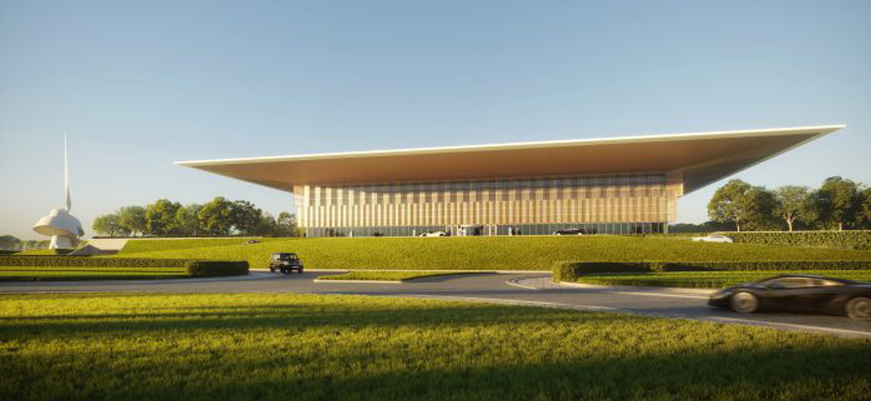
Intent on securing his rule, al-Mamun moved his official residence to Baghdad, bringing his authority and royal patronage to the House of Wisdom. The House of Wisdom’s main project was collecting and translating numerous works from the Greek literary canon, which established an enormous influence on Arab thought. Works including those by Plato, Aristotle, Ptolemy, Hippocrates and Euclid were requested from libraries in the West, such as the library at Constantinople, and brought back to Baghdad to translate. Under Caliph al-Mamun ( ), who was an enthusiastic promoter of the House, it was greatly extended to include separate galleries for each branch of science. The existence of the House of Wisdom is presently disputed, as is its form and function. Arabist Dimitri Gutas posits in his 1998 book that “House of Wisdom” is a translation error from Khizanat al-Hikma, which he asserts simply means a storehouse, and that there are few sources from the era during the Abbasid Era that mention the House of Wisdom by the name Bayt al-Hikma.
Works and scholars
The historical approach has determined the research framework of gathering relevant information about the House of Wisdom and its administrative and intellectual impact on emergence of new public and private libraries. The history of libraries is a history of human thought for libraries have been the stronghold of thoughts preserving them and passing them from generation to generation. We can say that among the first centers of human civilization intellect was the library of the Mesopotamian peninsula a saying that has been proved correct by different Cuneiform script writings. Which means that libraries are not founded only in our modern time, but excavations of archaeologists have backed the idea that libraries as ancient as writing for it was a very crucial invention in human history and a factor in ancient civilizations' development. Three decades later, the collection had grown so large that his son, Caliph Al-Ma’mun, built extensions to the original building turning it into a large academy named Bayt al-Hikma (the House of Wisdom) that housed different branches of knowledge.
Notable intellectuals
One impetus for so many books was the introduction of new writing material, namely paper—a technology as revolutionary as the printing press for its time. The House of Wisdom attracted Muslim, Christian, and Jewish scholars from all over the Muslim world and was a place where a wide range of languages including Arabic, Farsi, Aramaic, Hebrew, Syriac, Greek, and Latin could be spoken and read. The House of Wisdom came into being as a library, translation institute and academy of scholars from across the empire. Beginning as a project to protect knowledge, including philosophy, astronomy, science, mathematics and literature, it quickly became, and is still considered today, a symbol of the merging and expansion of intellectual traditions from across different cultures and nations. The library grew to become the flower of the Islamic Golden Age, a period between the 7th and 13th centuries of great intellectual growth and discovery in the Islamic world. The death in AD 809 of al-Rashid resulted in a civil war among the Abbasids, after which his son al-Mamun managed to take power after a long struggle with his half-brother.

The Meaning of Life
The Great Symposium Walkthrough - Assassin's Creed Mirage Guide - IGN
The Great Symposium Walkthrough - Assassin's Creed Mirage Guide.
Posted: Wed, 03 Jan 2024 08:00:00 GMT [source]
Abdullah Ibn al-Muqaffa ( ) was another pioneer of literary translation sponsored by the House of Wisdom. He took Greek words, such as "philosophia" that became "falsafa" in Arabic, and found translation solutions via what contemporary translators would call equivalents. Later, al-Mamun would appoint him head editor in charge of revising all translations at the House. Al-Mamun’s dedication to collecting texts and expanding the repository of classical knowledge earned him the nickname “the sage of Baghdad”. But Rashid’s eldest son, the seventh Abbasid caliph, al-Mamun ( ), had greater ambitions for the building. Therefore, the House of Wisdom at the time of Rashid was called Bayt al-Hikmah as it was comprised of a single building.
It quickly became one of the most famous centers of learning, attracting scholars from all over the world, from many cultures and religions. This recognition about who was the original founder of the center can become confusing and further details explaining the order of events might assist in this understanding. Al-Rashid was the one who gathered most of the different books, manuscripts and objects coming from his father and grandfather, and started the collection. Eventually this compilation of different materials became so large that al-Ma’mun had to build an extension to the original building, turning it to a large academy which, then, came to be known as the House of Wisdom.
This allowed Muslim scholars to verify astronomical information that was handed down from past scholars. The study highlights the development that marked the house of wisdom in the time of the Abbasids. The main objective of this paper is to explore the impact of the house of wisdom on the Islamic libraries, moreover it studies the organizational structure of Bayt al-Hikmah along with library divisions and services that it provided for scholars and readers.
Not only did the Muslims in this era build observatories but soon after in Central Asia, they built a paper mill, which then led to the production of dyes, inks, glues, and even book bindings. This powerful activity generated a ripple effect which gradually spread all over the Eastern world, with innumerable benefits. It was necessary to go deep into a particular field, only in order to find that the truth contained in the veins of that area was no more, no less, than the truth contained in another area, despite any apparent differences. The intention was to work towards the underlying Unity of all the areas of knowledge. The goal was the Unity, not the particular subject, even less the practitioner of that subject, a complete contrast to the approach in our own society, where the cult of celebrities overshadows the real value of something, whether it is art or science. Institutionalized by al-Ma'mun, the academy encouraged the transcription of Greek philosophical and scientific efforts.
The end of the center of knowledge
In modern times the library became a symbol of the scientific enterprise and imperial glory of the early Islamic period. It is frequently imagined as a centre of scholarship and collaboration for the greatest minds in Baghdad and its environs as well as the heart of a robust translation movement of Persian, Greek, and Syriac literature into the Arabic language. The House of Wisdom was originally created in order to house translators and preserve their works but it soon included additional research activities in the areas of medicine, science and astronomy. Two of the most important Caliphs, al-Rashid and al-Ma’mun, had personal interests in scientific works.
Error: Form could not be submitted at this time. Please try again or refresh the page to start over.
Unlike what some people may believe about the ancient libraries being unable to match the contemporary bookstores, libraries were the meeting place for men of literature, science, cultures, religions, etc. In the House of Wisdom, translators, scientists, scribes, authors, men of letters, writers, authors, copyists and others used to meet every day for translation, reading, writing, scribing, discourse, dialogue and discussion. Many manuscripts and books in various scientific subjects and philosophical concepts and ideas, and in different languages were translated there. Caliph Haroon al-Rasheed is credited with expanding the glory of Baghdad to its greatest height during his reign from 786 to 809 C.E. He created an intellectual ambience by encouraging mathematicians, astronomers, scientists, and philosophers. His son, Caliph al-Mamoon went a step further by establishing the House of Wisdom in, an academic institute devoted to translations, research, and education.

People from all over the Muslim world flocked to the House of Wisdom – both male and female of many faiths and ethnicities. Among the academy’s leading lights were Al-Kindi, who commissioned the transition of Aristotle, and Hunyan ibn Ishaq, who translated Hippocrates. Foreseeing the impending tragedy, the Persian astronomer Nasir al-Din al-Tusi ( ) saved several thousand manuscripts by moving them to the Maragheh Observatory in northwestern Iran, built by Mongol ruler Hulagu in 1259. In eighth-century Baghdad, the Abbasid Caliphate took a momentous decision to found a library dedicated to preserving knowledge from across the world, known as Bayt al Hikmah, the House of Wisdom. By bringing together top experts and authors, this archaeology website explores lost civilizations, examines sacred writings, tours ancient places, investigates ancient discoveries and questions mysterious happenings. Our open community is dedicated to digging into the origins of our species on planet earth, and question wherever the discoveries might take us.
It was home to the House of Wisdom, an academy of knowledge that attracted brains from far and wide. Although it is unknown whether the miḥnah had any direct impact on Bayt al-Hikmah, mention of the library ends almost entirely after the death of al-Maʾmūn in 833. Tensions between the caliphate and the old establishment continued into the reign of al-Muʿtaṣim (833–842) and forced him to move the capital from Baghdad to nearby Sāmarrāʾ. Bayt al-Hikmah remained intact in Baghdad, but its association with al-Maʾmūn in 10th-century texts may indicate that its collection was not supplemented after the capital was moved to Sāmarrāʾ. Whatever may have remained of the collection in 1258 was destroyed in the Mongol sack of Baghdad.
During debate, scholars would discuss their fundamental Islamic beliefs and doctrines in an open intellectual atmosphere. Furthermore, he would often organize groups of sages from the Bayt al-Hikma into major research projects to satisfy his own intellectual needs. For example, he commissioned the mapping of the world, the confirmation of data from the Almagest and the deduction of the real size of the Earth (see section on the main activities of the House). He also promoted Egyptology and participated himself in excavations of the pyramids of Giza. Al-Ma’mun built the first astronomical observatories in Baghdad, and he was also the first ruler to fund and monitor the progress of major research projects involving a team of scholars and scientists. Further, it was also linked to astronomical observations and other major experimental endeavors.
It was under his son Al Ma’mun that the library became a hub of scholarship and translation, andduring this period, that one of its main activities became the translation of scholarly texts from Greek and Syriac into Arabic. These translations became the basis for further research in the fields of mathematics, science, alchemy, astronomy, philosophy and medicine. Mūsā ibn Shākir was an astrologer, and a friend of Caliph Harun al-Rashid’s son, al-Ma’mun. His sons, collectively known as the Banū Mūsā (Sons of Moses), also contributed with their extensive knowledge of mathematics and astrology. Between 813 and 833, the three brothers were successful in their works in science, engineering, and patronage.
And while some people may seem content with the story as it stands, our view is that there exist countless mysteries, scientific anomalies and surprising artifacts that have yet to be discovered and explained. From the 7th century onwards, men and women of different faiths and cultures built on knowledge from ancient civilisations making breakthroughs that have left their mark on our world. 1001 Inventions is an award-winning international science and cultural heritage organisation that raises awareness of the creative golden age of Arabic Science. Caliph Al-Ma’mun is said to have encouraged translators and scholars to add to the library in the House of Wisdom by paying them the weight of each completed book in gold. The heyday of Baghdad was 1,200 years ago when it was the thriving capital of the Muslim civilisation.
Following his predecessors, al-Ma’mun would send expeditions of scholars from the House of Wisdom to collect texts from foreign lands. Hunayn ibn Ishaq (809–873) an Arab Nestorian Christian physician and scientist, was the most productive translator producing 116 works for the Arabs. Al-Ma’mun established the House of Wisdom, putting Hunayn ibn Ishaq in charge, who then became the most celebrated translator of Greek texts. As “Sheikh of the translators” he was placed in charge of the translation work by the caliph. Hunayn ibn Ishaq translated the entire collection of Greek medical books, including famous pieces by Galen and Hippocrates. The Sabian Thābit ibn Qurra (826–901) also translated great works by Apollonius, Archimedes, Euclid and Ptolemy.


No comments:
Post a Comment